Operations automation studio · n8n, Airtable, Supabase, Next.js
Five systems, four sectors, one method.
The range is the point: hiring, sales, outreach, sourcing. The same discipline transfers because the failure modes are the same everywhere: silent duplicates, unbounded spend, confident guesses, and nobody able to say what actually ran.
Two of these are recruitment systems that solve different problems: AutoRecruit moves candidates through a pipeline; the retrieval layer answers questions from a grounded knowledge base. Three of these are my own builds, one is a productized build, and one was a client delivery; each page says which.
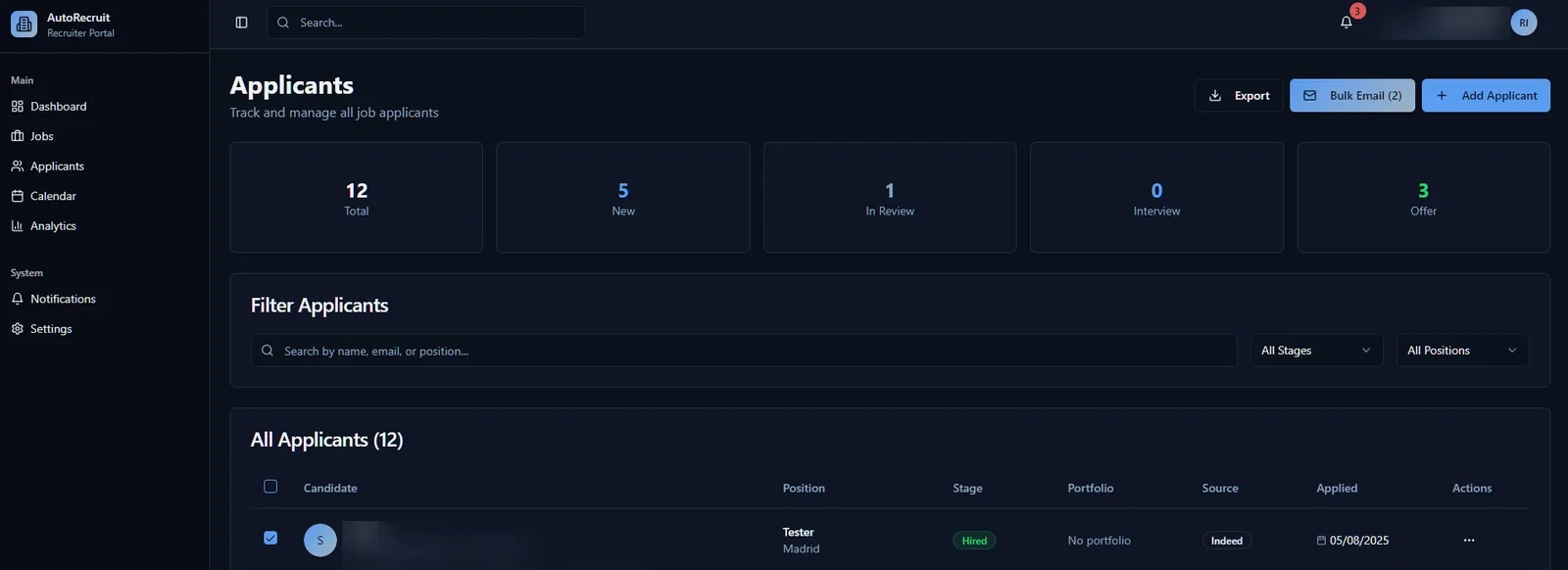
The whole hiring pipeline in one recruiter portal, backed by eight n8n workflows. Built so a confidently wrong automated rejection cannot happen quietly.
FIG. 01 Applicants tracked across stages, with filtering by stage and position. Candidate details are redacted; the records shown are test data.Seeded demo data. Nothing on this screen is a client result.
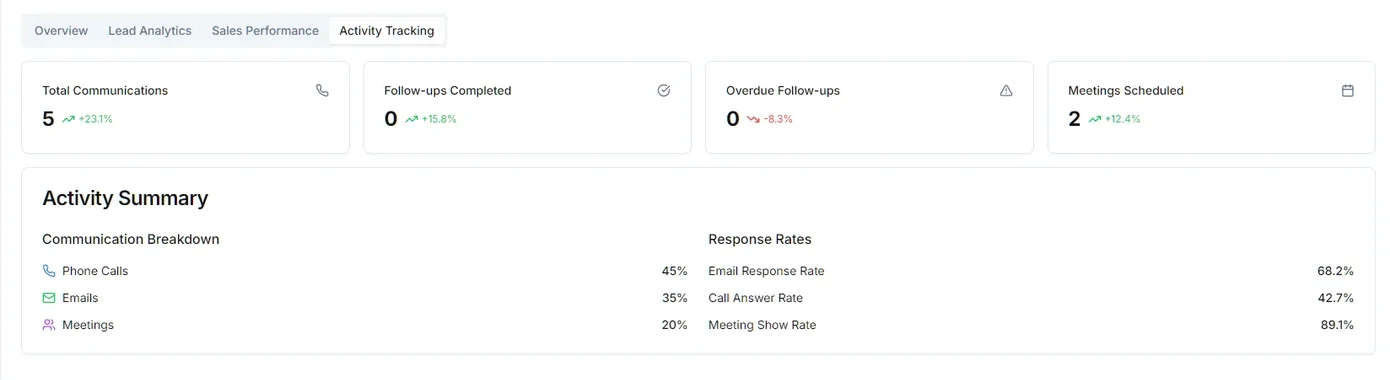
Capture through close in one platform: AI lead scoring, automated multi-channel follow-up, integrated scheduling, and a complete interaction history per lead.
Sector
Sales operations
Stack
n8n · SMS · Email · Voice
Data shown
Seeded demo data. Nothing on this screen is a client result.
FIG. 02 Response rates by channel, computed by the system instead of assembled by hand. Figures are seeded demo content.Seeded demo data. Nothing on this screen is a client result.
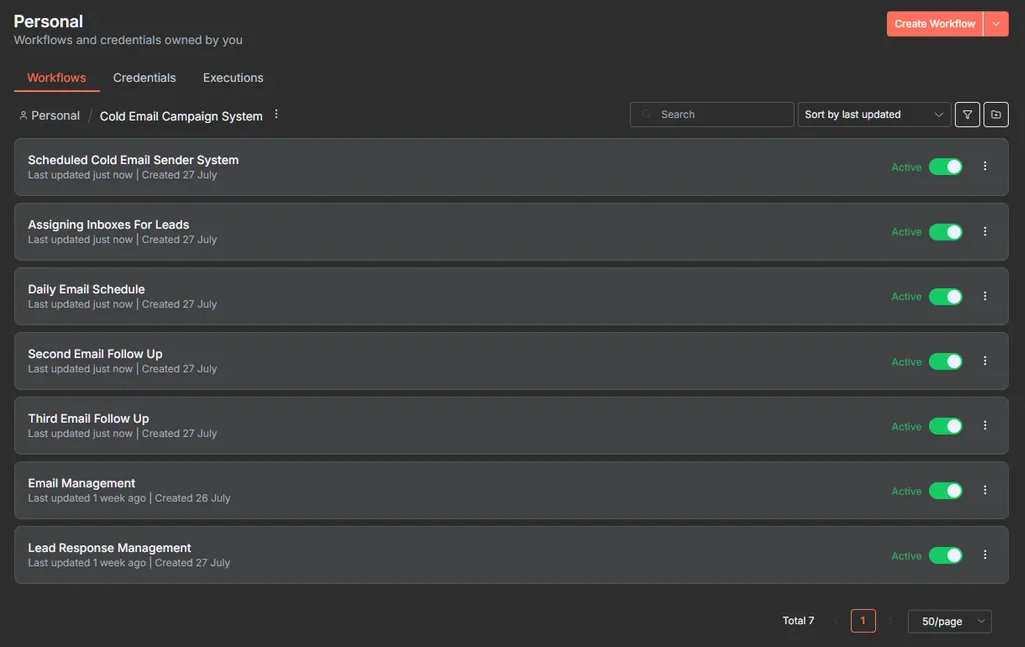
Seven interlocking workflows that bound sending reputation by design: hard daily quotas per inbox, one sender per prospect, follow-ups timed in business days, and sequences that stop on reply.
A retrieval-grounded email system rather than a chatbot bolted onto an inbox. Hybrid search plus reranking over a curated knowledge base, and a question with no source gets flagged to a person instead of an invented answer.
249 prioritized local businesses for a creator to pitch, delivered with contact and social details, at roughly a cent of API spend per business. The cost ceiling was passed in at runtime, so an expanded run cannot surprise anyone with a bill.